
How do you find out which skills you are missing?
The score is only useful if you can see what produced it. Every point traces to a named skill and a named benchmark.
Scored against the role
- Your readiness out of 100 for the role you actually want
- The specific skills holding the number down, named
- Industry standards for that role, not a generic profile
- Benchmarks against the level above you, not against strangers
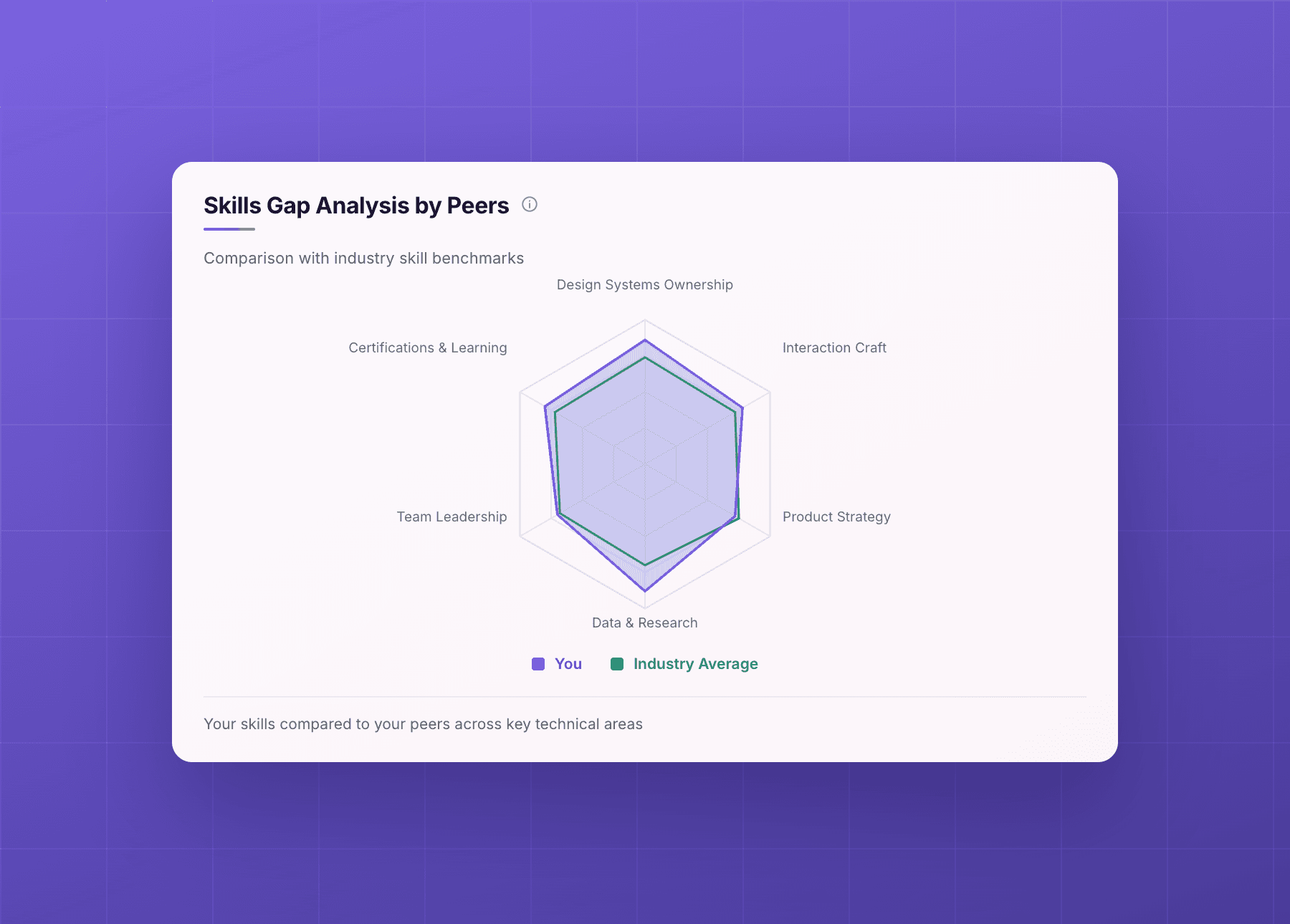
Scored against your peers
- Where you sit among people chasing the same role
- The blind spots: strengths you have that you are underselling
- Re-scored free, every time you close a gap
- Feeds straight into your roadmap and your matched jobs
Do I have to fill in a skills questionnaire?
Self-rated skill surveys measure confidence, not competence. This reads what you have actually done.
- 01
Upload your resume
We read your skills, roles and tools straight from it. PDF or DOCX, up to 5 MB.
- 02
Pick a target role
The benchmark is the role you want, so the number means something.
- 03
Read the breakdown
Skill by skill, with the three holding your score down called out first.
- 04
Come back after you learn
Re-scoring is free and unlimited. The loop never costs you anything to turn.
Is skill gap analysis free?
Finding out where you stand is free permanently. Credits only appear when you are producing something to send to an employer.
Skill gap analysis
Scored against the role you want, with the gaps named. No account required to see your first score.
Resume and ATS analysis
The full diagnosis of how your resume reads to a parser and to a person.
Re-scoring after you upskill
Unlimited and free. Closing a gap should never cost you money to prove.
What happens after you know your gaps?
Every tool feeds one connected profile, one growing score, and one resume that gets stronger with every skill you build.